

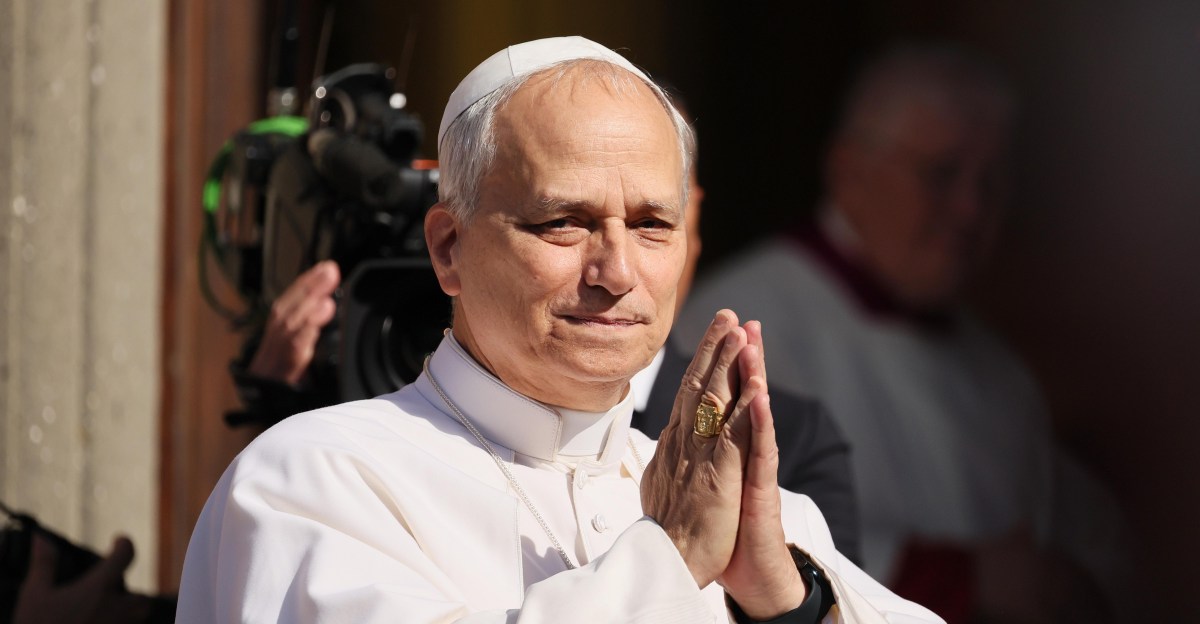
Pope Leo XIV says AI systems should be “disarmed,” adding that humans “have the responsibility to guide, change and, when necessary, reject its applications.” In Friday’s Papal Address, Pope Leo encourages United Nations member states to “take concrete steps toward banning lethal autonomous weapons” during their meeting in Geneva next month.
The address reflects many of the ideas Pope Leo laid out in his first major papal document in May, which highlighted “safeguarding the human person in the time of artificial intelligence.” In line with his encyclical, Pope Leo tells participants that “Machines are tools, not persons,” and warns about the dangers of granting AI systems rights or legal personhood. “Decisions affecting human life, freedom, and the use of force must always remain subject to effective, informed, and responsible human oversight,” Pope Leo says.
In 2024, Pope Francis similarly called for a ban on autonomous weapons, saying, “No machine should ever choose to take the life of a human being.” AI has become a popular topic for Pope Leo, who suggests he chose his name because he must confront advances in the technology — similar to how Pope Leo XIII presided over the church at the forefront of the Industrial Revolution.
Pope Leo closes out his address by calling for international institutions to safeguard the common good from AI-related risks, along with “shared standards, independent oversight and clear mechanisms of accountability so that decisions concerning the development and use of AI can be examined, challenged when necessary, and accompanied by appropriate remedies for any harm caused.”
Tangentially, that quote is from Frank Herbert’s Dune saga. In God-Emperor of Dune Leto II’s “Fish Speaker” soldiers are exclusively female for various reasons explained in the book. From memory: more disciplined, less rapey.
Yup. I was going to chastise you for calling to a literary work for the weight it holds, and then white washing it so it would be more palatable. Then I decided that flipping it would be more fun.
What was it that you considered “white washing” it? I did (now that I check) misquote it “likeness” rather than “image”, but can’t see how that’s white washing it.
“human” instead of “man’s”
Ah, right.
I was also stuck on a definition of “white washing” as the erasure of ‘non-white’ characters from film/literature.