

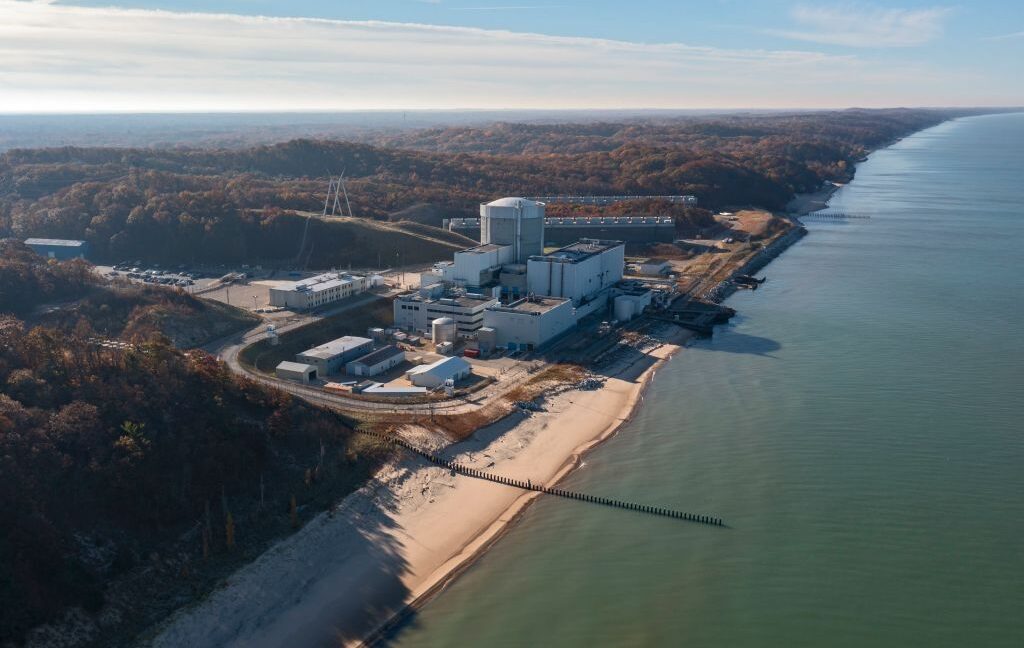
US regulators have issued a warning to a nuclear project critical to Donald Trump’s efforts to revive the industry, after a contractor fell into a reactor cavity and a bundle of fuel rods nearly tipped over during refueling.
US regulators have issued a warning to a nuclear project critical to Donald Trump’s efforts to revive the industry, after a contractor fell into a reactor cavity and a bundle of fuel rods nearly tipped over during refueling.
Nuclear is getting drastically cheaper as of late, and will likely continue to do so. Power infrastructure should not operate to turn a profit, but to provide a service. Nuclear does not take drastically different power infrastructure than current fossil fuels. Radiation is genuinely a non-issue. Waste can be stored in seismically inactive rock above the water table and be essentially ignored forever. Coal causes far more radiation contamination, by orders of magnitude, than nuclear, not to mention there has been barely any nuclear energy incidents, and we only know so much about the ones that did happen because of fearmongering. If water temperature is affecting the local rivers, the plant is mismanaged and poorly designed. My local plant only draws water from its own artificial lake, and does not affect the environment. In fact, it’s lake and the surrounding area was turned into an excellent park, where I hike often.
The reasons why nuclear makes a ton of sense, at least right now:
Nuclear won’t be a forever solution for large grid power, and will eventually be replaced by mature renewable infrastructure. That time is not going to be in the next decade, or even two, most likely. In the temporary, it can largely replace the fossil fuel industry that is killing the planet. In the long term, on-site reactors will allow power hungry infrastructure to avoid affecting the local power grid, like research institutions, large scale manufacturing, and data centers. You’re totally right in that renewables are far preferable to nuclear, but they simply aren’t swap in, swap out replacements for each other. Nuclear isn’t really competing with renewables, it’s competing with fossil fuels. They’re both critical parts of what we need to get off fossil fuel dependence.
Edit: For the record, coal plants can take upwards of 8 years to construct and typically multiple decades to “break even.” We don’t operate power infrastructure because it’s profitable, but because we need it.
Source on nuclear getting cheaper to build?
Also, solar and wind plus storage is cheaper, faster online, does not need artificial lakes, nor 1000 year storage that has historically been horrible. Plants also historically didn’t need to update security. It’s literally the worse option. Even with green hydrogen and storage.
Your coal argument is a strawman/whataboutism. I’m saying skip nuclear unless you’re around the artic circle.
Source on storage that has historically been horrible? Our storage facilities are pretty simple. Just a salt mine in the desert. My source on nuclear getting cheaper to build is that many, many companies are choosing to plan on-site nuclear plants rather than other options, and Eastern countries building it cheaper year over year. In the West, nuclear cost per kWH has dropped significantly over time, but construction costs have moderately increased (mostly due to mismanagement). I agree, nuclear isn’t super applicable outside of certain areas, but even in metropolitan areas that have good access to sun and wind, you still need extensive storage capacity for periods of less activity, which just doesn’t exist on the scales we need yet. It’s not a funding or adoption issue, we literally just haven’t figured out good solutions for efficient power storage on the necessary scales yet. We either need better battery tech or more efficient potential energy solutions. Artificial lakes are already present and usable, and can provide protected habitats and natural areas. Nuclear is a good option. There is a reason China and India are making such a transition, even when they’re aiming for full renewables. We need base load, for now, and nuclear is the best of bad options.
Where is the final depleted uranium storage facility in the United States?
Source on horrible storage: https://www.bge.de/de/asse/themenschwerpunkte/das-salzwasser-in-der-asse/
Salt water inside isn’t good. Estimated costs are in the billions and paid by the tax payers and not the company responsible for it.
Source on kWh prices for nuclear?
“Flamanville 3, under construction in 2010, had an initial estimated cost in 2007 of €3.3 billion. By the time the reactor went online in 2024, the final cost had risen to an estimate €13.2 billion”
Hinkey point is currently being built and has a minimum price per kWh of 15 cents. Even the worst priced private solar offer over here will be closer to 10 and a good one with storage at 6. For commercial it’s closer to 3. Including storage at commercial capacity is around 10.
https://www.iwr.de/news/britisches-atomkraftwerk-hinkley-point-c-verzoegert-sich-weiter-und-wird-teurer-atomstrom-kostet-mindestens-15-cent-pro-kilowattstunde-news39541
There isn’t any salt water if it’s in a salt mine above the water table in seismically inactive rock. The one I’m referring to is WIPP in the US. This is just one source for kWH prices: https://www.statista.com/statistics/184754/cost-of-nuclear-electricity-production-in-the-us-since-2000/. Search it, and there are many, many more. A little basic, 15 second research could get you 90% of the way there, instead of having me pull it for you. Individual mismanaged Western plants are not indicative of the trends of the industry as a whole. You can always find a standout poor example. Again, energy storage is not there yet. We physically cannot replace all fossil fuel reliance with purely renewables yet. It will happen, but not for some time. Price per kWH does not tell the full story of reliability over time.