

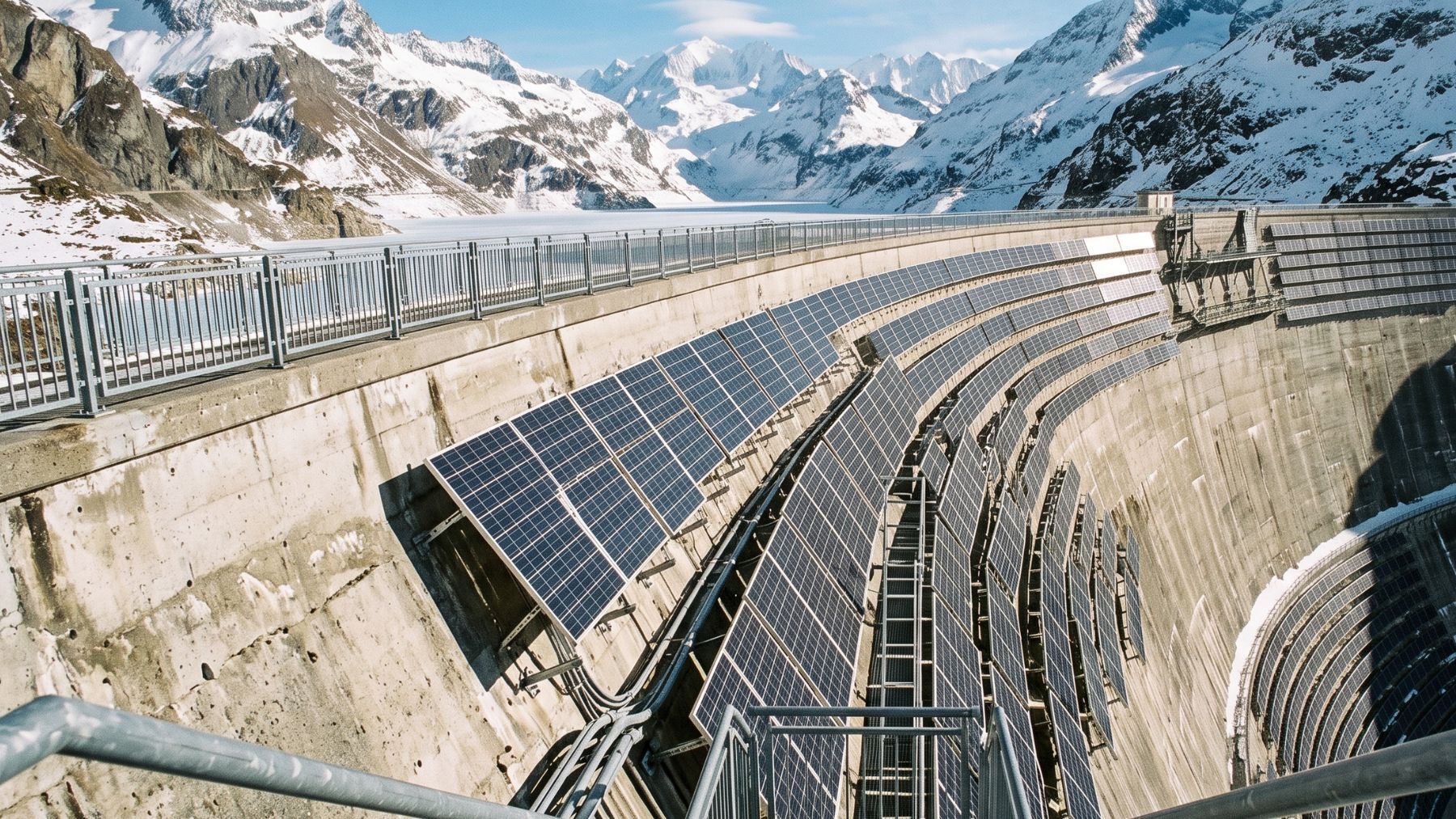
Up on the dam, almost everything that looks like a problem becomes an advantage.
The plant sits above the fog line, in thin, clear air that lets far more sunlight through.
The higher you go, the stronger and cleaner the sunlight becomes.
Cold actually helps, because solar panels work more efficiently when they are not baking in heat.
And then there is the snow, which acts like a giant mirror, bouncing extra light up onto the panels from below.
Scientists call it the albedo effect, and it can lift a mountain plant’s output well beyond anything possible in the valley.
A test site at a similar height recorded yearly output far above a typical Swiss plant.
usually snow slides off solar panels fairly easily since they are smooth, tilted, and absorb heat.
It can build up overnight though, so I think the question remains valid.
deleted by creator
Good point, great comparison.
Just to add a little anecdotal story, our solar panels were quite good at getting rid of snow. It took a little while after the sun come up but once a little bit of the panels were exposed, it started to go fast.
yeah i mean even after it’s built up it will slide off in sheets when there is enough sun.
I was more referring to snowpack - at this elevation, multiple days of snowfall accumulating several feet deep is common in some parts of the world. For reference, the tallest mountain in Colorado is 3000 feet lower. I assume it’s a pretty arid region, or they wouldn’t have built it.