The problem with vibe coding is that progress is great at first, it can build out the basic structure of an application, a data layer, some functionality that works, etc. But as the application gets more complex, it really starts to struggle to add that complexity without it getting confused and throwing out stuff that works because it can’t get the new parts to work. Or it forgets a structure that has been implemented, and designs a whole new structure for each added part, so you end up with massive regressions, a Frankenstein’s monster of different styles and implementations, and a very inconsistent application that just feels wrong to use. And if you now need to go in to the code to improve it yourself, you’ll either hit a wall of your own ability, or you’ll spend all your time trying to fit the square peg into the round hole that the ai generated. A complex application like Photoshop will never be replaced in it’s entirety by a vibe coder, not without good engineers keeping everything in check for the long term.
Not to argue with you, as I observe the same issues with assisted coding. But as someone who uses Photoshop on and off (mostly off recently, Gimp is sufficient for my needs) for like 20 years, I have an impression that it’s mostly coded by people who do not care in the slightest of what they’re doing. Not to say enthusiastic about their job. I imagine there are many people working on Photoshop, and some of them are very professional and all, but most I believe are just there doing shitty job. It’s fucking mess, the Photoshop, and most (if not all) Adobe’s products.
So while I’m very sceptical, as the next guy is, I believe we may see the rise of the vibe coded alternatives. A decade ago, when I had a simple task that involves doing something with an image, I built my process around Photoshop. Today, I try to vibe code a standalone CLI thing that does one simple thing, as I need it. (Often, they’re wrappers for ImageMagick.) I can imagine someone more skilled taking it further and making a GUI for it, and I doubt that would be worse than what’s Photoshop is.
So, if the product would accumulate a momentum, a dedicated professional folks may actually come up and lead some things here and there. The clean room implementation is an obvious bullshit. But as much Adobe doesn’t care about the copyright and licenses, why would an average Joe care about some intellectual property that Adobe holds?
They professional folks could show up at the doors of Gimp, Krita, Inkscape. Which would be better. But I think all these projects has fundamental issues with their UIs, providing mediocre UX way too often. (But sometimes much better, so it’s not like it’s entirely broken.)
Getting a piece of software done, the main work, the 80%, takes 20% of effort.
Refining the remaining 20% on the other hand takes 80% of all effort and time invested.
Another aspect is burnout. Sure, vibe coding means sped up development, but what I noticed was… I also lost interest in projects much quicker. Unless it directly delivers something I need - e.g. I’ve built a 3D printer stand for my new Bambu H2C - it’s going on the pile of “80% finished crap”.
And the thing is, you CAN build an AI setup that automates everything. I’ve put together a skill/agent/rule stack that is essentially an entire company’s engineering department. It works autonomously, only looping in the user for major decisions (and those decisions get a proper report the user can read to contextualise the decision itself). It creates initiatives, epics, then refines those into stories, then stories get planned with tasks, subtasks, etc., which then get the design-develop-test-verify loop (test here stands for test writing, while verify is the QA smoke test). Stories get the appropriate level of detail, with a BDD approach (so happy path, unhappy path, and edge case scenarios are defined before work begins), experts are created on-demand, the list goes on. All of this with 6-8-10 parallel teams.
It works incredibly effectively.
It also burns through tokens like there’s no tomorrow. I let it run over a weekend - Saturday morning to Sunday midnight. It correctly identified the project needs for a relatively small thing (something a sole developer would write over 2-3 months), created an appropriate enterprise approach, broke it down into 9 MVP stages, and in 2 days, delivered the first four of those.
At the cost of burning through an entire weekly allowance of Claude Max 20X tokens…
I guess I could pay another £150 for a secondary account and have it churn through my old projects to refine and finalise them, but it’s hardly worth the money.
And no, while I say that it’s a “full company”, it’s only because I am an actual software engineer, I understand the code being written, I understand the processes, the flows. It’s not something you can toss to a complete beginner and have them build a successful business on top.


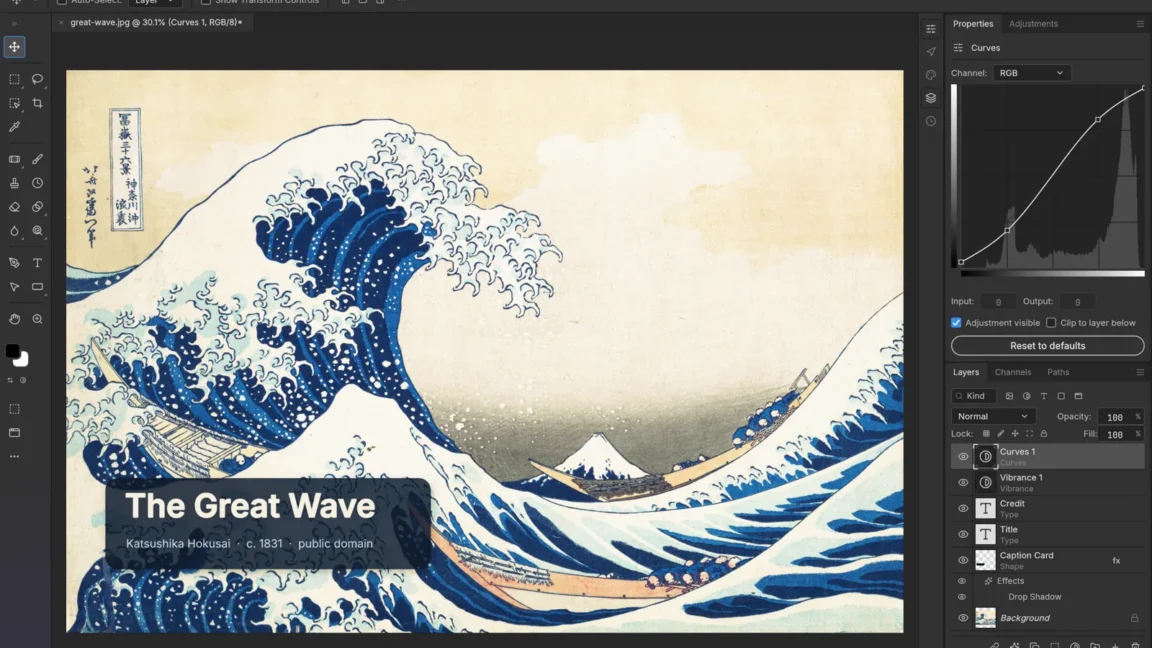
The problem with vibe coding is that progress is great at first, it can build out the basic structure of an application, a data layer, some functionality that works, etc. But as the application gets more complex, it really starts to struggle to add that complexity without it getting confused and throwing out stuff that works because it can’t get the new parts to work. Or it forgets a structure that has been implemented, and designs a whole new structure for each added part, so you end up with massive regressions, a Frankenstein’s monster of different styles and implementations, and a very inconsistent application that just feels wrong to use. And if you now need to go in to the code to improve it yourself, you’ll either hit a wall of your own ability, or you’ll spend all your time trying to fit the square peg into the round hole that the ai generated. A complex application like Photoshop will never be replaced in it’s entirety by a vibe coder, not without good engineers keeping everything in check for the long term.
Not to argue with you, as I observe the same issues with assisted coding. But as someone who uses Photoshop on and off (mostly off recently, Gimp is sufficient for my needs) for like 20 years, I have an impression that it’s mostly coded by people who do not care in the slightest of what they’re doing. Not to say enthusiastic about their job. I imagine there are many people working on Photoshop, and some of them are very professional and all, but most I believe are just there doing shitty job. It’s fucking mess, the Photoshop, and most (if not all) Adobe’s products.
So while I’m very sceptical, as the next guy is, I believe we may see the rise of the vibe coded alternatives. A decade ago, when I had a simple task that involves doing something with an image, I built my process around Photoshop. Today, I try to vibe code a standalone CLI thing that does one simple thing, as I need it. (Often, they’re wrappers for ImageMagick.) I can imagine someone more skilled taking it further and making a GUI for it, and I doubt that would be worse than what’s Photoshop is.
So, if the product would accumulate a momentum, a dedicated professional folks may actually come up and lead some things here and there. The clean room implementation is an obvious bullshit. But as much Adobe doesn’t care about the copyright and licenses, why would an average Joe care about some intellectual property that Adobe holds?
They professional folks could show up at the doors of Gimp, Krita, Inkscape. Which would be better. But I think all these projects has fundamental issues with their UIs, providing mediocre UX way too often. (But sometimes much better, so it’s not like it’s entirely broken.)
It’s the 80/20 principle.
Getting a piece of software done, the main work, the 80%, takes 20% of effort.
Refining the remaining 20% on the other hand takes 80% of all effort and time invested.
Another aspect is burnout. Sure, vibe coding means sped up development, but what I noticed was… I also lost interest in projects much quicker. Unless it directly delivers something I need - e.g. I’ve built a 3D printer stand for my new Bambu H2C - it’s going on the pile of “80% finished crap”.
And the thing is, you CAN build an AI setup that automates everything. I’ve put together a skill/agent/rule stack that is essentially an entire company’s engineering department. It works autonomously, only looping in the user for major decisions (and those decisions get a proper report the user can read to contextualise the decision itself). It creates initiatives, epics, then refines those into stories, then stories get planned with tasks, subtasks, etc., which then get the design-develop-test-verify loop (test here stands for test writing, while verify is the QA smoke test). Stories get the appropriate level of detail, with a BDD approach (so happy path, unhappy path, and edge case scenarios are defined before work begins), experts are created on-demand, the list goes on. All of this with 6-8-10 parallel teams.
It works incredibly effectively.
It also burns through tokens like there’s no tomorrow. I let it run over a weekend - Saturday morning to Sunday midnight. It correctly identified the project needs for a relatively small thing (something a sole developer would write over 2-3 months), created an appropriate enterprise approach, broke it down into 9 MVP stages, and in 2 days, delivered the first four of those.
At the cost of burning through an entire weekly allowance of Claude Max 20X tokens…
I guess I could pay another £150 for a secondary account and have it churn through my old projects to refine and finalise them, but it’s hardly worth the money.
And no, while I say that it’s a “full company”, it’s only because I am an actual software engineer, I understand the code being written, I understand the processes, the flows. It’s not something you can toss to a complete beginner and have them build a successful business on top.