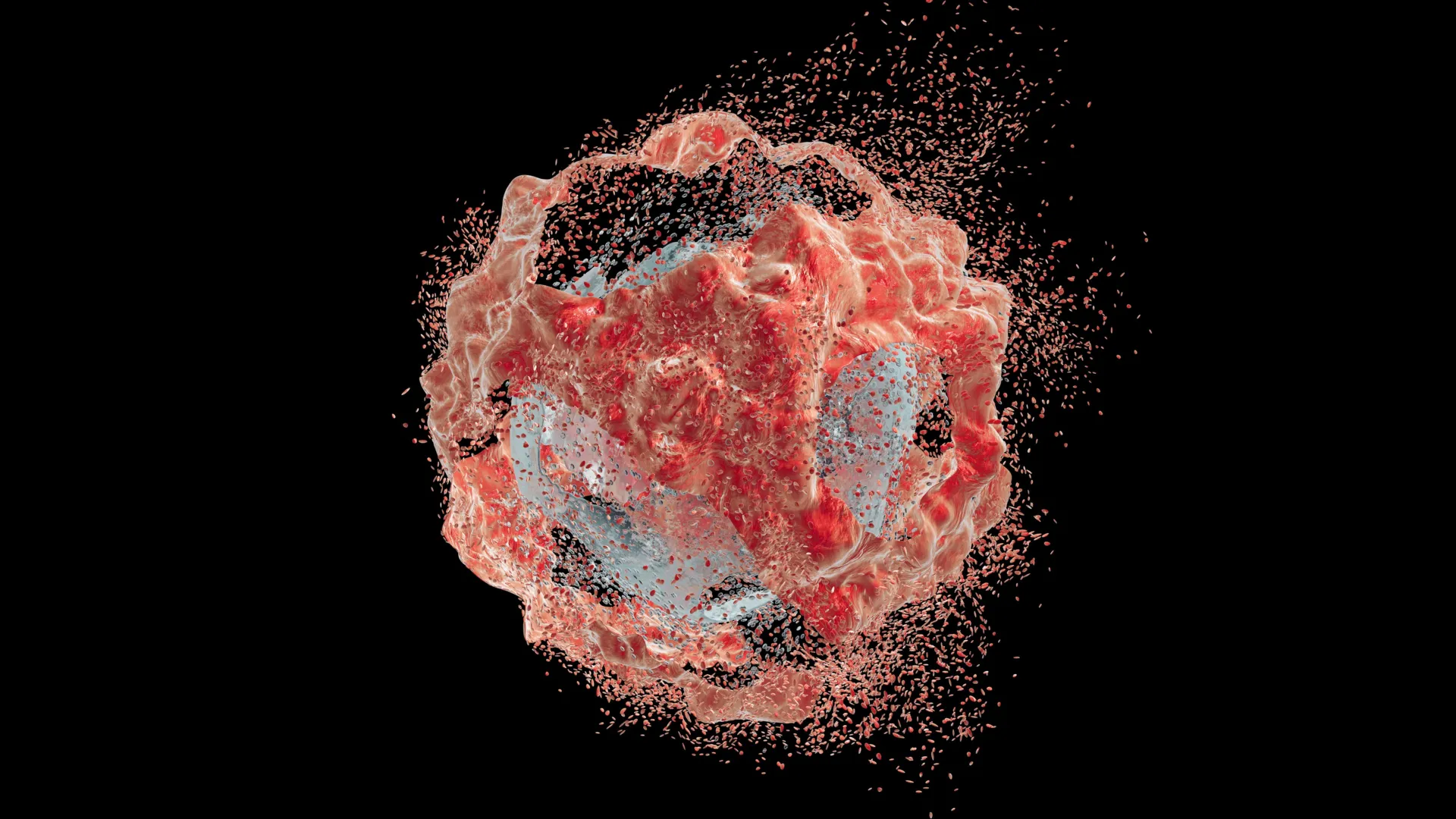
Researchers tested experimental PCAI compounds against pancreatic cancer cells and found they had powerful anticancer effects. One leading compound blocked more than 90% of cancer cell migration, suggesting it could help prevent the spread of tumors. Rather than suppressing cancer signaling, the treatment hyperactivated key pathways until the cells essentially self-destructed.


I need a THDU on that one…
Too hard, didn’t understand.
cells have different enzymes, enzymes do different things, to keep everything in order you need some way to control these enzymes. there are many, many ways in nature to do this, but the one relevant here is that some enzymes have tyrosine residue sticking out in a specific way. when phosphate is attached to them, extra charge appears, which can bend enzyme out of or into shape, switching it on or off or changing something about the way it works.
the job of flipping these switches belongs to tyrosine kinases, and in many cancers something is wrong about these. the ones relevant here are from RAS/MAPK pathway and PI3K/AKT/mTOR pathway, and these are involved in many things, but among them is cell growth and division. blocking one or other tyrosine kinase from working is something that many of anticancer drugs do, and it works pretty well, because overactive (for whatever reason) or mutated tyrosine kinase is often present. in many cancer cells, if for some reason MAPK is made to be more active, cancer cells might grow faster.
now the thing is, there is something peculiar about the specific way in which RAS/MAPK cascade is broken in that cancer type, that when it’s cranked up cells stop spreading and break apart. this is something that this new drug seems to be doing (through a couple of layers of other enzymes), and it’s weird, and unexpected, and in no way you’d get funding for that, but it works apparently
Firstly, I want to second that this explanation was very good. Second, can you explain why funding would not be available to study why this drug is effective? To me it would seem that this could be a master key that unlocks treatment options for other types of cancers
“hey what if we tried to make cancer grow faster” is not a great pitch
they got funding because it wasn’t what they were trying to do, but it did ended up being the case, but it worked anyway so, so far, all is good. but don’t expect that it will become a new drug, because 90% of clinical trials fail, and here maybe there is some other less malformed cancer line that will grow faster after administration of that drug, which is sort of what was could be expected now that we know mechanism
Isn’t this the mechanism with which extremely large animals like whales use to kill cancers? They essentially allow cancer to develop cancer and self metabolize?
whales and sharks get cancer, they do not kill cancer cells. I have no idea where this story started. Mosquitos don’t get cancer, because they only live 10 days.
Notice I never mentioned that they don’t get cancer. But also there’s more than a few reputable sources that explain Peto’s Paradox. These 2 are what I learned from.
https://youtu.be/mzmOXF4slPM https://youtu.be/1AElONvi9WQ
because some asshole shut down the NIH Cancer research division in 2025. Guess who.
This is a chemical compound with activity in vitro. Long way off from a drug.
!summonbot thisparticularxkcd
Fair, preclinical drug candidate more like
That’s a damn good explanation, thanks!