

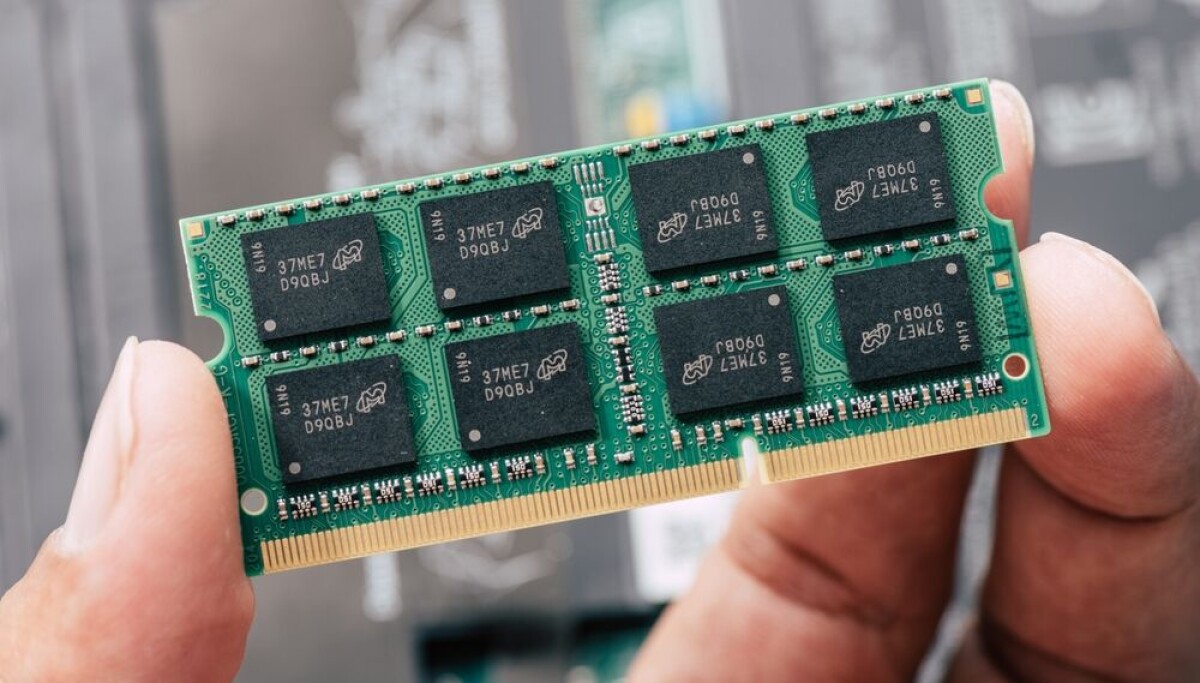
Memory-maker Micron has found a way to keep prices for its products sky-high for another five years, by signing 16 “strategic customer agreements” (SCAs) that include a floor price the company says comes with “a very robust gross margin for Micron, well above our peak quarterly margins in any past cycle.”
Micron CEO, president and chairman Sanjay Mehrotra explained the SCAs in prepared remarks delivered during the company’s Q3 earnings call. He explained that Micron has signed 16 SCAs, most of them covering 2026 to 2030, and that they involve a commitment to buy a certain quantity of product and pay for it in a pricing band that has a floor and a ceiling price. The floor price covers the historically high gross margins mentioned above, and the ceiling price means those who commit to an SCA are insulated if memory prices go even higher.
Market share is meaningless when the same infrastructure can be used to crank out a slightly different product with an insane profit margin.
There is no logical reason for Chinese corporations to produce consumer RAM for less profit than what datacenters use.
If RAM prices rise to where profit margin is comparable, they’ll make consumer RAM.
Which is literally why RAM.prices are astronomical right now…
Does none of this make sense to you?
They would also sell datacenter RAM for lower prices to get market share there. Of course they would still make a good profit, but they wouldn’t be able to sell at the same prices as established manufacturers anyway since they first have to prove themselves.
Because who would buy RAM by an unknown manufacturer if you could get it at the same price from a known manufacturer?
Bur we’ll see what happens first, the AI bubble popping or chinese manufacturers producing RAM. Both will help lower the price.
And there is actually a reason to sell consumer RAM, if they establish themselves as a good brand to buy RAM from they can get some loyal customers which might buy from them again, whereas there is no real long term loyalty or reliability in datacenter RAM. If the AI bubble pops they will stop buying it.
Well, a consumer giving you $350 for a RAM set is cash in hand. The contracts with hyperscalers are all IOUs until the contracts are actually fulfilled aren’t they? At what point does actual money, not the promise of money, transfer from buyer to seller?