I commented here quite some back that I did not expect that Valve would subsidize the console and that it would be for this reason, that subsidizing the console means a razor-and-blades business model, and a razor-and-blades model requires a closed system, where one has to purchase additional product specifically from the vendor of the initial product. They were making an open system, where this isn’t the case.
The razor-and-blades business model[1] is a business model in which one article is sold at a low price or even given away in order to increase sales of a complementary good, such as consumable supplies. It is different from loss leader marketing and product sample marketing, which do not depend on complementary products or services. Common examples of the razor-and-blades model include inkjet printers whose ink cartridges are significantly marked up in price, coffee machines that use single-use coffee pods, electric toothbrushes, and video game consoles, which require additional purchases of accessories and software not included in the original package.[1]
Although the concept and the catchphrase “Give 'em the razor; sell 'em the blades” are widely credited to King Camp Gillette, the inventor of the double-edged safety razor, Gillette did not in fact follow this model, nor did it invent the razor-and-blades model, although it did pioneer the production and sale of disposable razor blades.[1][2]
In more recent times, video game consoles have often been sold at a loss while software and accessory sales are highly profitable to the console manufacturer. For this reason, console manufacturers aggressively pursue legal action against carriers of modchips and jailbreaks due to a belief that the resulting possibility of unauthorized or prohibited copying causes a loss in profits. Particularly in the sixth generation era and beyond, Sony and Microsoft, with their PlayStation 2 and Xbox, had high manufacturing costs. As such, the companies sold their consoles at a loss and aimed to make a profit from game sales.[9][10] Nintendo had a different strategy with its GameCube, which was considerably less expensive to produce than its rivals, so it retailed at break-even or higher prices.[11] In the following generation of consoles, both Sony and Microsoft have continued to sell their consoles, the PlayStation 3 and Xbox 360 respectively, at a loss, with the practice continuing with the concurrent eighth and ninth generations of console hardware.[12][13][14]
In other words, you wouldn’t want a small business buying a hundred of these, slapping Windows Enterprise on them, and using them as the cheapest computer in the market. Because that’s something you can just do to these, which isn’t so easy with locked-down consoles.


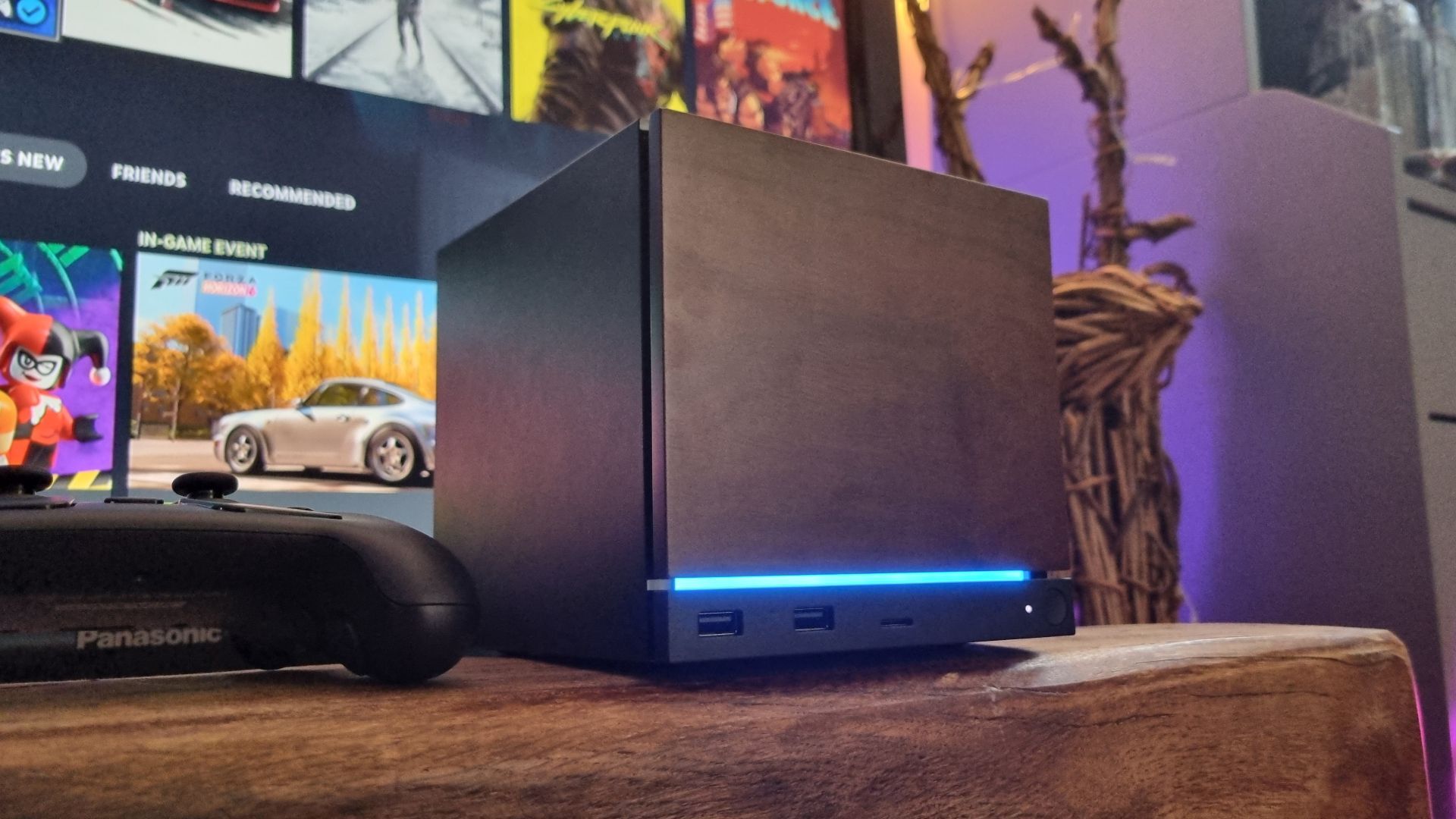
I commented here quite some back that I did not expect that Valve would subsidize the console and that it would be for this reason, that subsidizing the console means a razor-and-blades business model, and a razor-and-blades model requires a closed system, where one has to purchase additional product specifically from the vendor of the initial product. They were making an open system, where this isn’t the case.
https://en.wikipedia.org/wiki/Razor-and-blades_model
In other words, you wouldn’t want a small business buying a hundred of these, slapping Windows Enterprise on them, and using them as the cheapest computer in the market. Because that’s something you can just do to these, which isn’t so easy with locked-down consoles.