

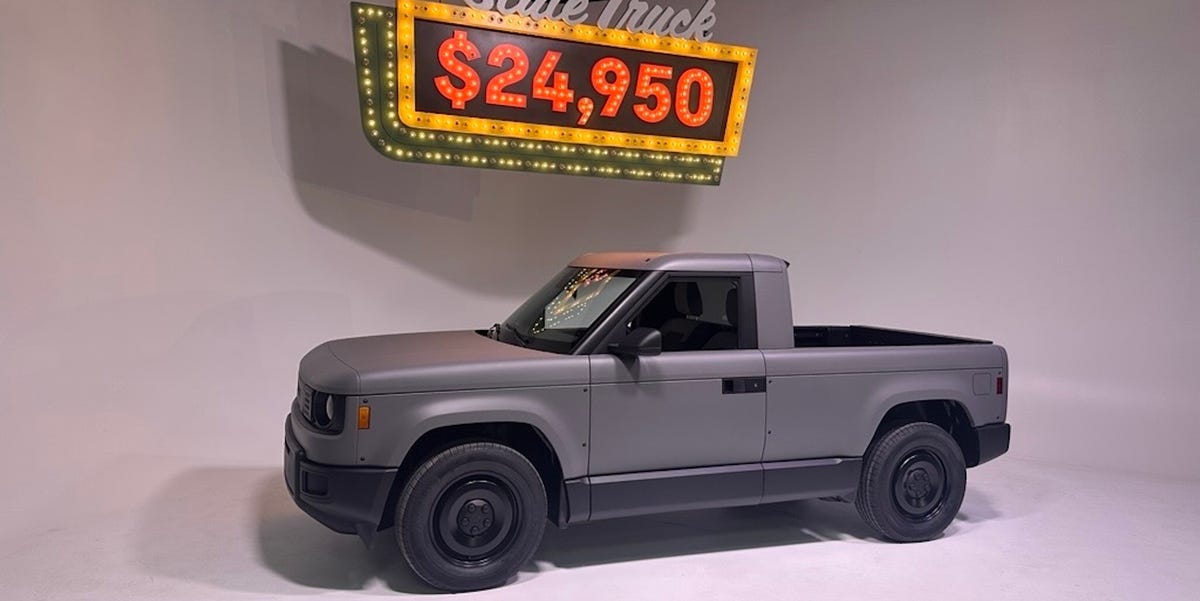
cross-posted from: https://piefed.social/c/electricvehicles/p/2162853/usa-slate-s-new-electric-truck-will-cost-slightly-more-than-24950
Range is said to be 205 mi (330 km), higher than the original estimate. This price is for the basic truck. The SUV configuration is expected to be $5000 more.
The plane trip is a great analogy. There’s probably plenty of data on which aircraft can fly it and, optimizations aside, you might have the option of over-fueling to be sure you can accomplish it.
With a BEV your pitiful energy limit might mean doing all those cross country calculations just to reach the other side of the state. And even then the sheer number of variables (Will I hit traffic? Will a fast charger spot be available at X? When exactly will it drop below freezing? Will my battery be conditioned at start? Does M miles of ~N mi/kWh surface streets beat M-Y miles of highway…) makes it impossible to precisely say.
You basically have to drive by feel, hence my reckoning of my car needing 1.5-2x dashboard mileage buffer for critical margin trips. I’ve personally made the exact same trip in different conditions and pulled in from as low as 3% up to 35% battery remaining.
The only solutions are way better/larger batteries, much smaller cars, or massively expanded charging infrastructure. Unfortunately nothing [affordable] in the market is addressing any of those.
I think the market is addressing all three. The F-150 Lightning is giving way to the Slate and Ford’s upcoming Ranchero. They’re working on battery chemistries, they’ve been getting better. Charging infrastructure HAS been built out.
Gas car owners haven’t seen EV charging stations going in, because they’re often put in out-of-the-way places. They’re not as visually obvious as gas stations, so gas car owners may have been surrounded by them and not realize it. So they don’t feel like the infrastructure is there, when it is. The EV charging industry has done a better job of concealing itself from the American public than the NSA.
I could rant about charging stations being difficult to find, “But use an app” you mean nazi stalker software? We’re in an age where a lot of people want to step back from all that shit because of who’s running it all. I genuinely do prefer to find gas stations by seeing their signs. I could throw my phone in a lake and drive my 2005 Buick to California, right now. I know how the US interstate system works and I know how to find and buy gas without any precise location enabled spyware.
Let’s ignore that for now, and instead: EV prononents like to point out that most charging will be done at home, and charging away from home will be a rare occasion mostly on road trips. Lemme ask you something: You got an app on your phone you only use occasionally? It’s a pain in the ass, right? Go to order your quarterly pizza from Domino’s and the app needs to be manually updated and logged back into and their terms of service have changed…sounds like fun to deal with when you’ve been sent on a 4 hour mission and you need to find a charging station. Phone apps aren’t tools you can get and put in your toolbox until you need them, they rust.
BUT ANYWAY. What they need is better communication of the vehicle’s limitations. The manufacturer spits out a number achieved in ideal conditions. Then you talk to owners and they go “Yeah. WELLLL…it depends” and start listing the conditions where you won’t get that. Start telling me what the machine WILL do, give me ways to predict the vehicle’s performance in non-ideal conditions, or start engineering those limits out.
I’d rather hear “It will do 200 miles between charges.” more than “It’ll do 300 miles. WELLLL…it depends. Maybe it’ll only do 180 if it’s cold out and you’re running the heater.”