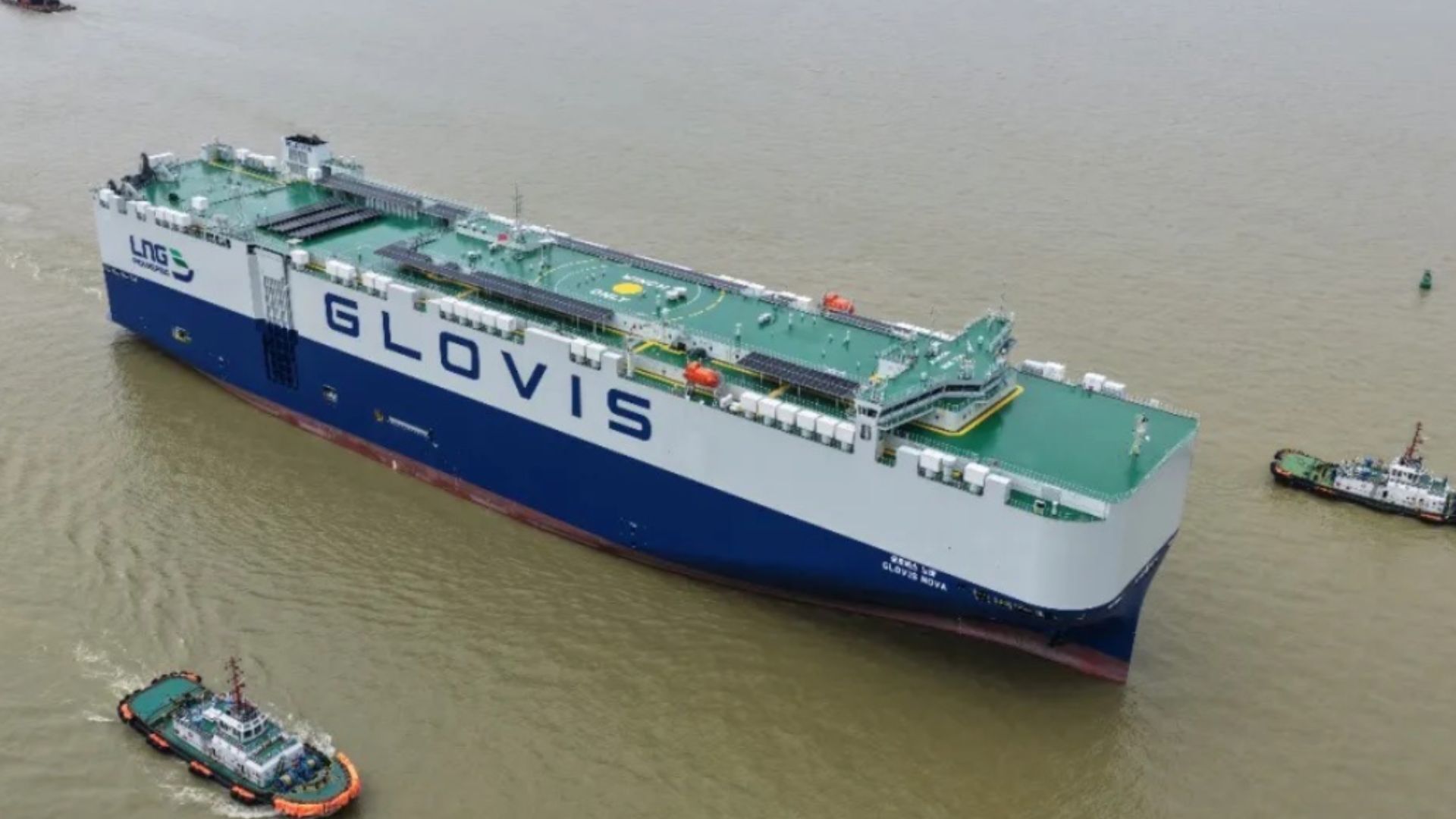
China has delivered the world's first 10,800-vehicle car carrier equipped with a solar power system, combining photovoltaic technology with LNG dual-fuel propulsion.
“the propulsion force generated was less than the motor would have generated if it had been connected to a standard marine propeller.”
Based on that, the input power is a constant because they are comparing against the same motor. I would assume the power consumption is constant rather than bursty for either propulsion system, so there isn’t any peak-vs-avg power to be concerned about either.
That “source” is some NASA tutorial that just states that quote without any elaboration at the bottom. I don’t know how that passes as a source at all nor is it generally applicable in
modern ships.
On the other hand there are multiple ships currently using these as additional propulsion system (as you can see further below in the wiki article). Flettners inital prototype used rotors as exclusive propulsion system. One could also use a kite or a sail by using the wind in favourable conditions.


The exact quote is
Based on that, the input power is a constant because they are comparing against the same motor. I would assume the power consumption is constant rather than bursty for either propulsion system, so there isn’t any peak-vs-avg power to be concerned about either.
That “source” is some NASA tutorial that just states that quote without any elaboration at the bottom. I don’t know how that passes as a source at all nor is it generally applicable in modern ships.
On the other hand there are multiple ships currently using these as additional propulsion system (as you can see further below in the wiki article). Flettners inital prototype used rotors as exclusive propulsion system. One could also use a kite or a sail by using the wind in favourable conditions.