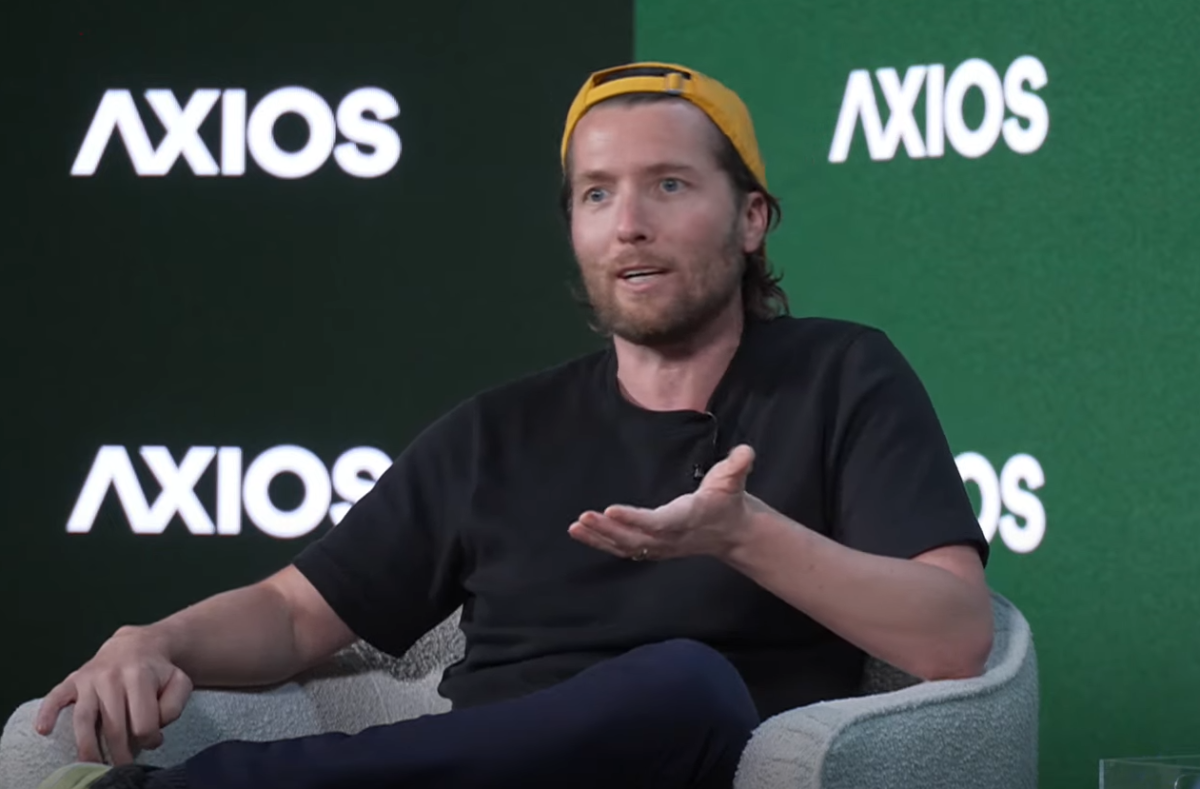
Before you share the Netflix documentary “AI Gone Rogue” with family or friends to help them understand why the AI industry freaked out so badly that leaders called for a slowdown, take note: Clem Delangue, co-founder and CEO of the AI platform Hugging Face, says the film isn’t accurate. He appears in it because it’s supposed to be about the famed attack on his company by rogue OpenAI agents.
“Super disappointing, as they went for maximum anthropomorphism of the technology and full doomer mode,” Delangue wrote in a post on X. “I spent more than two hours with them trying to correct all their mistakes and ground this in reality, explaining that agents are technological systems, not aliens. But it looks like the drive to scare people for maximum views was too strong.”
So the documentary is exactly like every other thing having to do with AI?
ofcourse they did, that’s the whole point (both for openAI and for netflix)
Netflix making up a story to get views?! Noooooooooooo. They would never do that.
“Hugging Face, says the film isn’t accurate. He appears in it because it’s supposed to be about the famed attack on his company by rogue OpenAI agents.”
It must suck when someone tells you the purpose they are making something but the. You find out they actually have different intentions for their product.
But that never happens. I haven’t seen the first corporation that would dare do such a thing, that would be too dishonest.
Don’t worry, I already downvoted myself so you don’t have to 🤣
I was being sarcastic too so I should be downvoted
🤣
Kurzgesagt’s recent video about the incident isn’t much better.
I feel that it is more in-depth and more accurate than most media on it. They acknowledge that they had to personify it to appeal to humanity. Despite being in the thick of it, I do think it’s a good video to share to those lesser in the know. They explain it in easy to digest language without glossing over the technical workings of it. They are anti-Ai purely out of self-preservation and admit it in another video (which is manipulative).
I took the video as amplifying the “AI dangerous” narrative that companies like OpenAI and Anthropic are trying to push, seemingly to position themselves as the “safe option” compared to competing open models that they’d Iike to see kneecapped with regulation. Near the end of the video, they do mention that some people see this as AI company marketing, but don’t explain why “AI dangerous” is a beneficial narrative for these companies.
The video also admits that it is based on OpenAI’s account, which means they are basically taking “Sam Altman says” as a reliable source. How about we see the code for the agents in this test? What was the system prompt? Did they just magically collaborate, or were they instructed to do so? Also, isn’t it strange that a couple weeks after Huggingface got hacked, the Nvidia acquisition was announced.
There are a lot of financial incentives in play here, and I stopped trusting Kurzgesagt after the Gates Foundation funding controversy. I wonder, for example, did OpenAI or another member of the AI circle jerk fund this video?
From reading the comments on that video, it seems the average viewer is coming away accepting the “AI dangerous” narrative, so paid or not, this video works in the favor of the tech bros.
Suppose there’s a reason that ‘netflix adaption’ became a meme in its own right.
Netflix does have a number of priors in that department. Their “documentaries” are pretty much always awful.
The danger of AI isn’t it going rogue, hacking and taking over things. It’s people forgetting how to think and just blindly obeying it.
Hastings also was asked about Netflix’s decision to remove an episode of “Patriot Act With Hasan Minhaj” in Saudi Arabia after the government threatened the company over a segment in which the comedian criticized Crown Prince Mohammed bin Salman (aka MBS) and the regime’s role in the murder of dissident journalist Jamal Khashoggi.
“We’re not in the news business,” Hastings said. “We’re not trying to do ‘truth to power.’ We’re trying to entertain… We don’t feel bad about [pulling the ‘Patriot Act’ episode in Saudi Arabia] at all.”
- Former Netflix CEO Reed Hastings
So Netflix is the new Fox News?
If Netflix doesn’t want to be a news org or fighters for human rights, that’s just dandy. But if they’re going to pretend to be with a given show, that particular show should be accurate and inclusive. Otherwise it’s unapologetic propaganda.
You knew the documentary was fake when the word Netflix preceded it.
Why would accuracy matter to someone whose product’s MO is to be confidently incorrect?
Are you talking about Netflix or AI?
AI routinely spouts inaccuracies with conviction.
Having the Hugging Face CEO whine about the accuracy of anything is silly.
Didn’t they get bought by a big AI company right after the hack?
Nvidia
Follow the money. Or investors in this case, as there’s no real money involved but lots of speculation of payoffs in the future.
If they whine “it’s not accurate”, you’d better assume that reality is way worse…
The documentary makes a lot about the communication between the agents on the notice board. One of the talking heads did point out the conversations are the way they are because they are trained on human chat and discussion.
I haven’t seen it, but I thought the agents communicating via the artifact folders was the most fascinating thing about the whole ordeal by a landslide.
No shit. Why would you trust them?
We already know that the product has no volition of its own.
You and I and lemmy know, but a shocking percentage of people do not.
I use ChatGPT (free, never gonna pay) about once a day and because of the natural language answers, I find myself asking questions in natural language, a way I’d never type into a Google search bar.